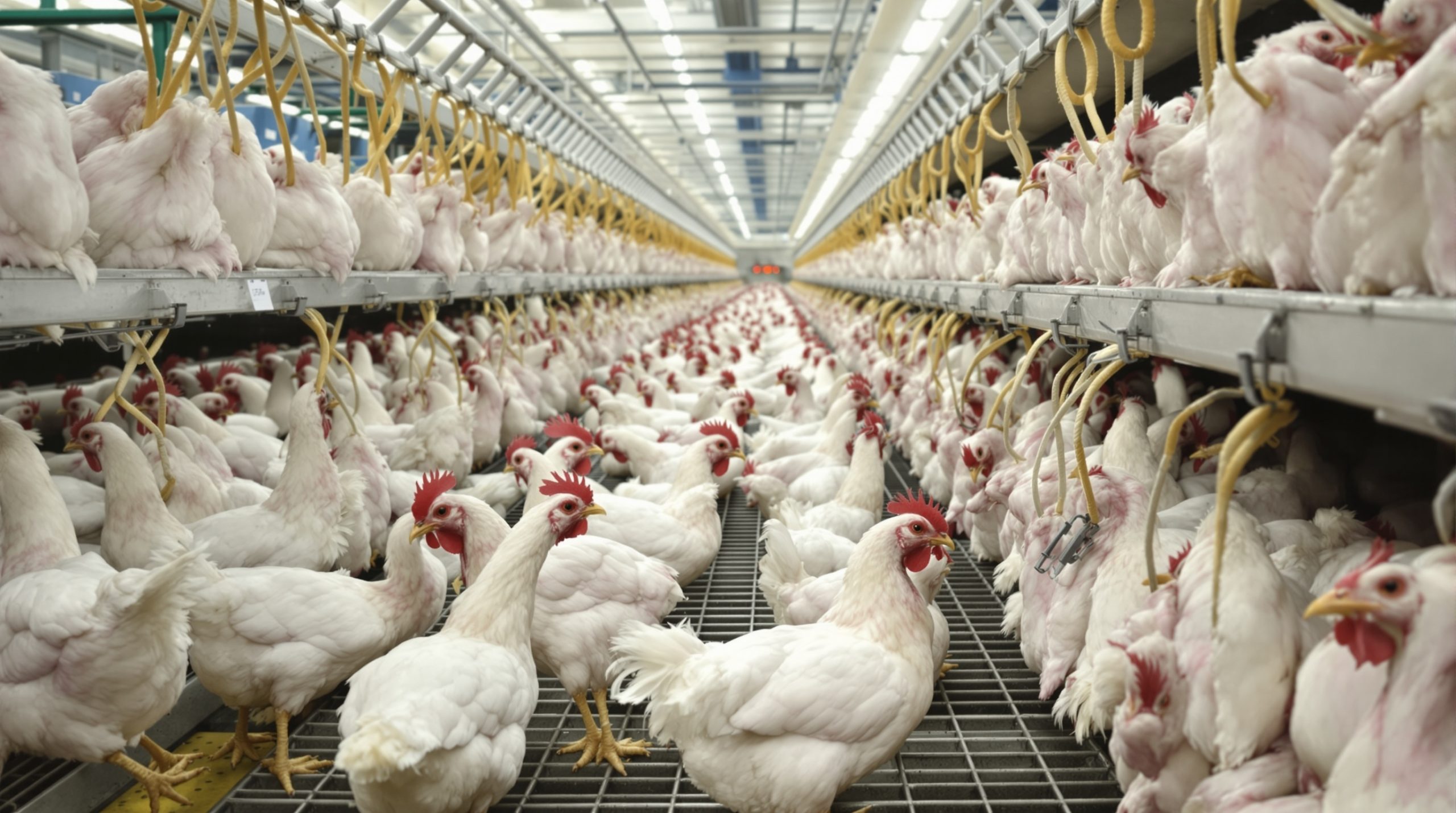
The poultry industry has undergone remarkable transformation over the past decade, with technological advancements revolutionizing every aspect of production—particularly in slaughtering operations. Today’s large-scale poultry processing facilities bear little resemblance to their predecessors, employing sophisticated equipment that maximizes efficiency, improves worker safety, and enhances food safety protocols. These modern slaughterhouses can process upwards of 175 birds per minute while maintaining stringent quality standards and adhering to animal welfare guidelines. As global demand for poultry continues to surge, manufacturers are investing heavily in innovative technologies that promise to further streamline operations, reduce labor dependencies, and minimize environmental impacts—all while improving the quality and safety of the final product.
Evolution of Modern Poultry Slaughtering Equipment
The transformation of poultry processing from labor-intensive operations to highly automated systems represents one of the most significant industrial evolutions in food production. Early mechanization focused primarily on basic hanging, stunning, and defeathering operations, but today’s integrated processing lines handle everything from live bird receiving to packaging of finished products with minimal human intervention.
According to our latest industry insights, the modern poultry processing facility now incorporates vision systems, robotics, and real-time monitoring technologies that were unimaginable just two decades ago. This technological revolution has been driven by increasing labor costs, stricter food safety regulations, and the economic pressures of global competition.
Key Historical Developments
The development of commercial poultry processing equipment has followed a clear trajectory:
- 1950s-1960s: Introduction of basic mechanical line systems for hanging and defeathering
- 1970s-1980s: Development of automated evisceration equipment
- 1990s-2000s: Implementation of computer-controlled cutting and portioning systems
- 2010s-Present: Integration of AI, robotics, and IoT technologies throughout the processing line
Critical Components of Modern Poultry Slaughtering Systems
Today’s high-efficiency poultry processing lines consist of several interconnected systems, each designed to perform specific functions with maximum precision and minimal cross-contamination risk.
Live Bird Handling and Stunning Technologies
Controlled atmosphere stunning (CAS) represents one of the most significant advancements in poultry slaughtering equipment. Unlike traditional electrical water bath stunners, CAS systems expose birds to carefully controlled gas mixtures that render them unconscious before any handling occurs. This approach offers numerous benefits:
- Improved animal welfare by eliminating stress from handling while conscious
- Enhanced worker safety through reduced bird movement
- Better meat quality with fewer hemorrhages and broken bones
- Improved hygienic conditions throughout the process
Modern CAS systems utilize multi-stage chambers with precise gas concentration monitoring to ensure humane and efficient processing. These systems typically use carbon dioxide, nitrogen, argon, or combinations thereof, with each configuration offering specific advantages depending on production needs.
Advanced Bleeding and Defeathering Equipment
Following stunning, birds move to bleeding stations where precision neck-cutting robots ensure consistent and complete bleeding. These automated cutting systems use camera guidance and machine learning algorithms to adapt to variations in bird size and position, achieving higher accuracy than manual cutting.
Modern scalding and defeathering equipment incorporates counterflow water systems and variable frequency drives that adjust to different bird sizes and processing speeds. Advanced systems feature self-cleaning capabilities and heat recovery mechanisms that significantly reduce water and energy consumption—critical factors in improving the sustainability profile and operational costs of large facilities.
Evisceration and Internal Organ Handling
Perhaps no area of poultry processing has seen more dramatic technological advancement than evisceration. Today’s automated evisceration systems use a combination of mechanical tools and vacuum technology to remove internal organs with minimal risk of rupturing the intestinal tract—a critical factor in preventing microbial contamination.
Modern systems include:
- Vent openers with vision-guided precision
- Synchronized eviscerators that adapt to varying bird sizes
- Automated giblet harvesting equipment that separates valuable organs
- Integrated crop removal systems
- Real-time inspection stations with high-definition imaging
These integrated systems allow processors to handle internal organs efficiently while maintaining strict hygiene standards throughout the process.
Data Integration and Smart Manufacturing in Poultry Processing
The concept of Industry 4.0 has transformed poultry processing through the integration of IoT sensors, cloud computing, and machine learning algorithms. Modern slaughtering equipment now generates vast amounts of operational data that helps facility managers optimize performance in real-time.
Smart manufacturing systems in poultry processing enable:
- Predictive maintenance that minimizes unplanned downtime
- Automatic adjustment of equipment parameters based on bird size variation
- Real-time yield monitoring and optimization
- Complete product traceability from farm to package
- Comprehensive data collection for regulatory compliance
These capabilities allow processors to maximize equipment utilization while identifying opportunities for improvement. Our free ROI & Carcass Balance Calculator can help processors quantify the financial benefits of these technological investments by analyzing potential yield improvements, labor savings, and reduced downtime.
Food Safety Enhancements in Modern Slaughtering Equipment
Food safety represents the most critical concern in poultry processing, and equipment manufacturers have responded with revolutionary designs focused on microbial control. Hygienic equipment design principles now govern every aspect of modern slaughtering systems.
Antimicrobial Intervention Technologies
Contemporary poultry processing lines incorporate multiple antimicrobial intervention points, including:
- Inside-outside bird washers with precision spray patterns
- Chilling systems with antimicrobial agents
- UV-C light treatment chambers for surface decontamination
- Steam vacuum systems for targeted contamination removal
- Automated chemical application systems with precise dosing
The integration of these technologies allows processors to achieve significant reductions in pathogen loads without chemical overuse or compromise to product quality.
Automated Cleaning Systems
Modern slaughtering equipment features built-in cleaning systems that dramatically reduce sanitation time and improve effectiveness. Clean-in-place (CIP) technology allows for thorough cleaning of internal components without disassembly, while automated foaming and sanitizing systems ensure consistent application of cleaning compounds throughout the facility.
These advancements not only improve food safety but significantly reduce water consumption—a critical consideration as water scarcity becomes an increasing concern globally.
Robotics and Automation: The Future of Poultry Processing
The most transformative trend in poultry processing equipment is the accelerating integration of robotics. Advanced robotic cutting and portioning systems now handle tasks that once required dozens of skilled workers, delivering unprecedented precision and consistency.
Modern robotic applications in poultry slaughtering include:
- 3D vision-guided cutting robots for custom portioning
- Automated deboning systems that adapt to varying bird anatomies
- Robotic pick-and-place systems for packaging operations
- Autonomous material handling throughout the facility
- Quality grading through AI-powered vision systems
These systems not only reduce labor dependencies but often improve yields by 1-2 percentage points—a significant economic advantage in an industry where margins are typically slim. The integration of these technologies has become essential for maintaining competitiveness in global markets.
Environmental Considerations and Sustainability
Modern poultry slaughtering equipment increasingly addresses environmental concerns through innovative designs focused on resource efficiency. Water recirculation systems, heat recovery units, and energy-efficient motors have become standard features in contemporary equipment.
Advanced waste management systems now integrate directly with processing lines, allowing for immediate separation and treatment of different waste streams. By-product recovery systems extract maximum value from processing waste, converting materials that once represented disposal costs into valuable revenue streams.
Conclusion: Investing in Technological Advancement
The rapid evolution of poultry slaughtering equipment presents both challenges and opportunities for processors. While capital investments in advanced technologies can be substantial, the returns in terms of efficiency, yield improvement, food safety, and labor savings typically justify these expenditures—particularly for large-scale operations competing in global markets.
As consumer demands for food safety, animal welfare, and environmental sustainability continue to increase, investment in advanced processing technologies will remain essential for competitive viability. Processors evaluating equipment upgrades should conduct comprehensive analyses that consider not just acquisition costs but long-term operational benefits across multiple dimensions.
For personalized guidance on selecting the optimal equipment configuration for your specific operation, contact our team of poultry processing specialists who can provide tailored recommendations based on your production goals, facility constraints, and budget considerations.
References
[1] Food Safety and Inspection Service – https://www.fsis.usda.gov/inspection/compliance-guidance/haccp/poultry
[2] Journal of Food Protection: Advances in Poultry Processing Technologies – https://meridian.allenpress.com/jfp/article/84/5/832/463287/Advances-in-Poultry-Processing-Technologies
[3] Animal Welfare in Poultry Slaughter: European Food Safety Authority – https://www.efsa.europa.eu/en/topics/topic/animal-welfare
[4] Poultry Science Journal: Energy and Water Efficiency in Poultry Processing – https://www.sciencedirect.com/science/article/pii/S0032579119310636
[5] World’s Poultry Science Journal: Technological Innovations in Poultry Processing – https://www.cambridge.org/core/journals/world-s-poultry-science-journal